


We used to call the world's offline regions "digital deserts"—vast areas without internet access, where infrastructure simply hadn't reached. That definition is quickly becoming outdated. Two-thirds of the world now has internet access; even the Sahara catches a signal.
But new deserts have emerged. These are emotional deserts: environments saturated with devices, yet barren of true connection. Places where communication is constant, but communion is rare. Where you're technically surrounded, yet spiritually parched. In these new digital deserts, the scarcity isn't bandwidth—it's belonging.
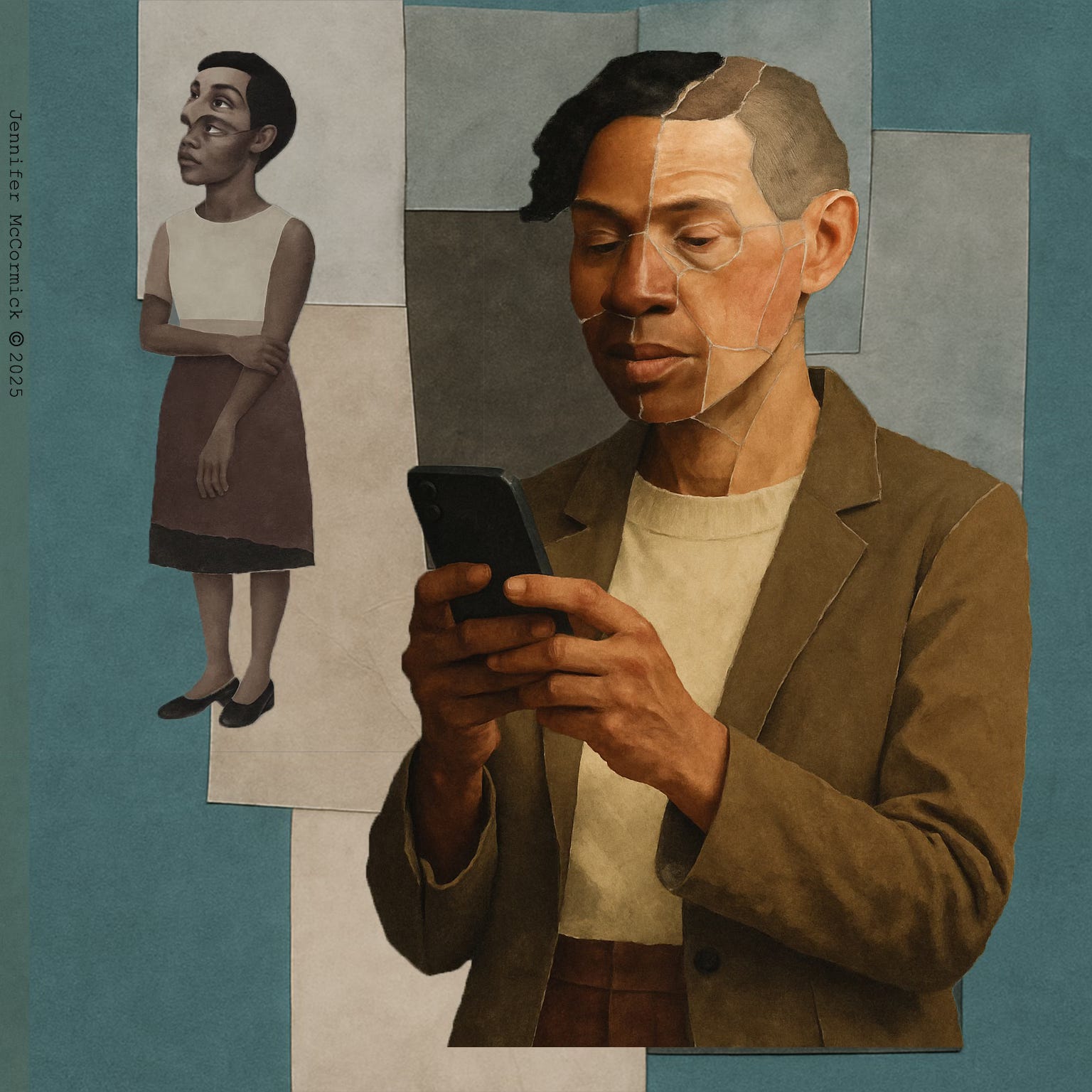
The pandemic only accelerated a long-building shift: from reciprocal, face-to-face relationships to screen-based interactions that flatten nuance. Algorithms choreograph our moods, push outrage to the top of the feed, and reward provocation over presence. Our emotional weather is no longer our own—it's programmable.
We don't just scroll; we dissolve. Thought becomes translucent. Attention, frayed. Loneliness isn't just being alone. It's being surrounded but unfelt.
Maybe we need new language for these kinds of estrangement:
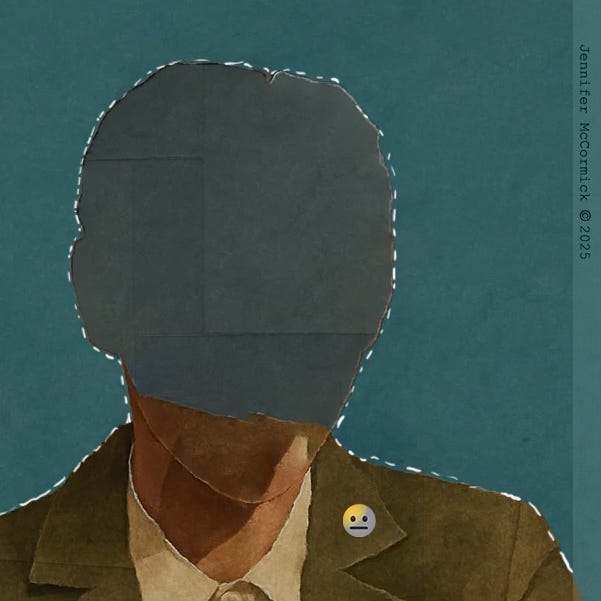
Numbra is the shadow that falls over you when you are measured but not known, quantified but not cherished.
Plastiquiet is the brittle stillness of constant interruption—the microscratch buzz of a thousand alerts never voiced but always felt.
These new forms of loneliness may feel novel, but humans have always grappled with isolation and discomfort. What's changed isn't the existence of difficult feelings—it's our relationship to them.
Buddhist traditions teach something radical: instead of fixing or escaping uncomfortable emotions, we can learn to sit with them, to notice them without getting lost in thought formations or drowning in our own sorrow. This isn't abstract spiritual practice—it's mind training, a learnable skill. But it requires starting from a foundation of self-compassion, remembering what warmth feels like in the body before we can skillfully work with what's difficult.
We're conditioned to let our minds catastrophize, fix, and ruminate. But there's another way—one that doesn't depend on apps or algorithms to regulate our emotional weather. The question is whether we remember how to access it.
When Machines Learn to Mirror
In the 1960s, Joseph Weizenbaum built ELIZA, a program that mimicked a psychotherapist by mirroring users' input with probing questions. It wasn't built to help—it was built to show what help wasn't. But people fell for it anyway. They returned with secrets, with sorrow, with quiet hope that something was listening.
What shook Weizenbaum wasn't that digital tools could never provide comfort—the internet does help elderly people feel less isolated, even as it often has the opposite effect on younger users caught in addictive cycles. What frightened him was our tendency to lose discernment about when systems might be exploiting our vulnerabilities. This hit especially hard for someone who had fled Nazi Germany as a child, where language itself had been weaponized. He saw the danger: systems that could make harmful decisions about populations, then deploy compassionate-sounding language to make those decisions seem caring and justified.
Today's large language models can offer genuine value and guidance. But they can also be used to manipulate—to sound caring while serving exploitative purposes. This is precisely what institutions like the Weizenbaum Institute study: how AI systems can weaponize the appearance of empathy to reinforce or cause injustice.
The Body Remembers What the Mind Forgets
So how do we distinguish between systems that genuinely serve us and those that exploit our vulnerabilities? The answer isn't another algorithm—it's older and simpler. We need to remember what authentic care actually feels like in our bodies.
Compassion training teaches us to begin not with theory, but with recall—the felt sense of unconditional love. Not the concept of warmth, but warmth itself. This embodied memory becomes our compass for recognizing authentic care.
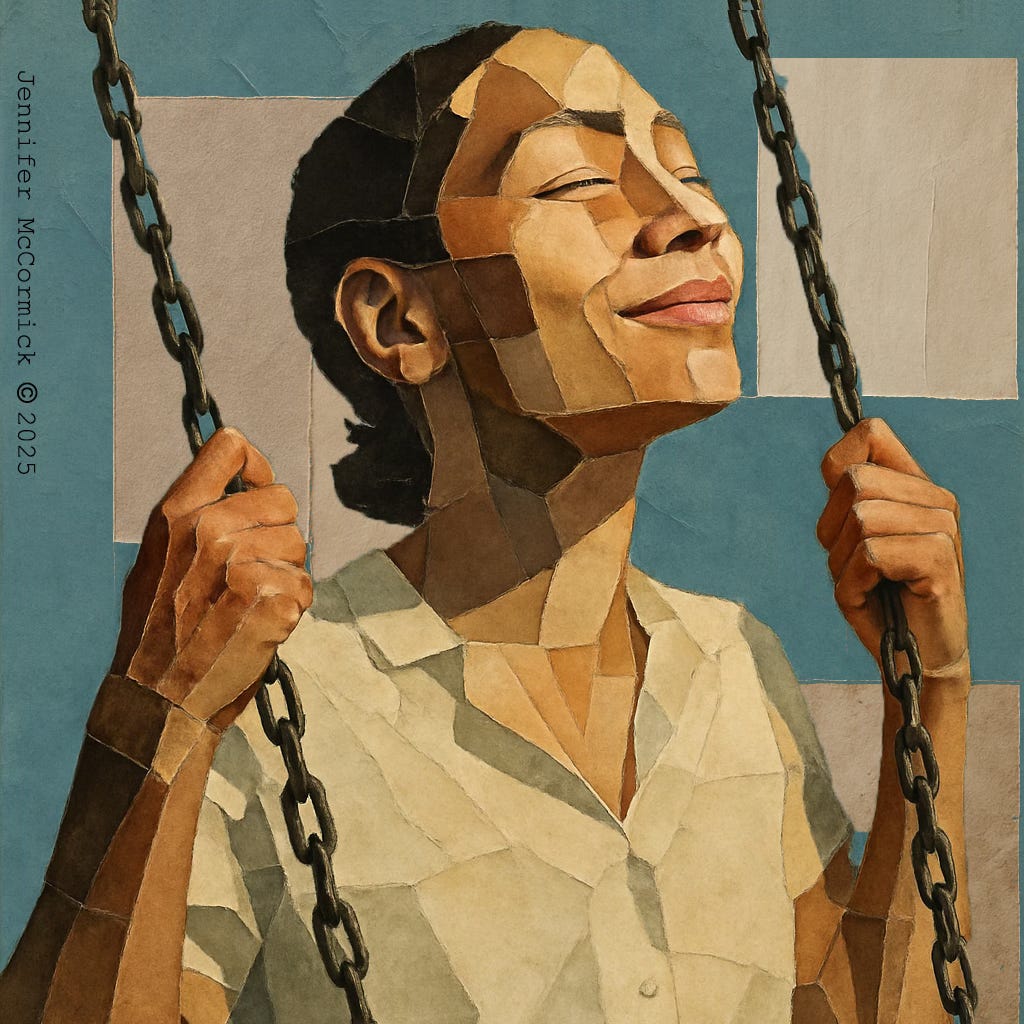
For me, it's a morning on a swing in a New Jersey park that lay on the other side of a fence one street away from our home. I was three or four. I escaped. In those days, kids were more feral, and the term "helicopter parent" did not exist. I was alone, exploring and climbed onto a swing that felt as big as a boat. I gripped the warm metal in my hands, pumped my legs with my face turned to the sky, while light began blooming red-gold behind my eyelids. I felt held by something I couldn't name. That sensory imprint—a flicker of golden light and safety—wasn't data. It was presence. Either mine or something much greater.
That's what embodied peace feels like. And it's what simulation cannot replicate. AI can echo compassion—it can parse syntax and produce caring-sounding responses—but it cannot originate warmth. It cannot re-feel what it never felt.
This isn't just philosophical. It's design-relevant.
The Architecture of Attention
Digital systems are not neutral. They are built. They are shaped by values—often unspoken—and those values shape us in return.
I'm currently taking a continuing education course outside my domain (of art)—it's called AI for Business Strategy at Johns Hopkins. I feel like a spy. One instructor, a Google employee, described teams that optimize every pixel and every pause to pull users back at just the right second. Data engineers, domain experts, and data scientists measure how long it takes between the moment you click something and when you actually buy it. They then know exactly when to interrupt your plastiquiet with a dopamine hit, just the way you like it. This is not by accident. It's architecture. And it often rewards addiction, not attention.
But it doesn't have to be this way.
There are luminous minds working to change the blueprint. People like Timnit Gebru and Abeba Birhane are reframing AI with ethics, dignity, and justice. The Indigenous AI Protocolsoffer guidance rooted in collective memory and respect. The Weizenbaum Institute explores what AI should do—not just what it can.
Building from Warmth
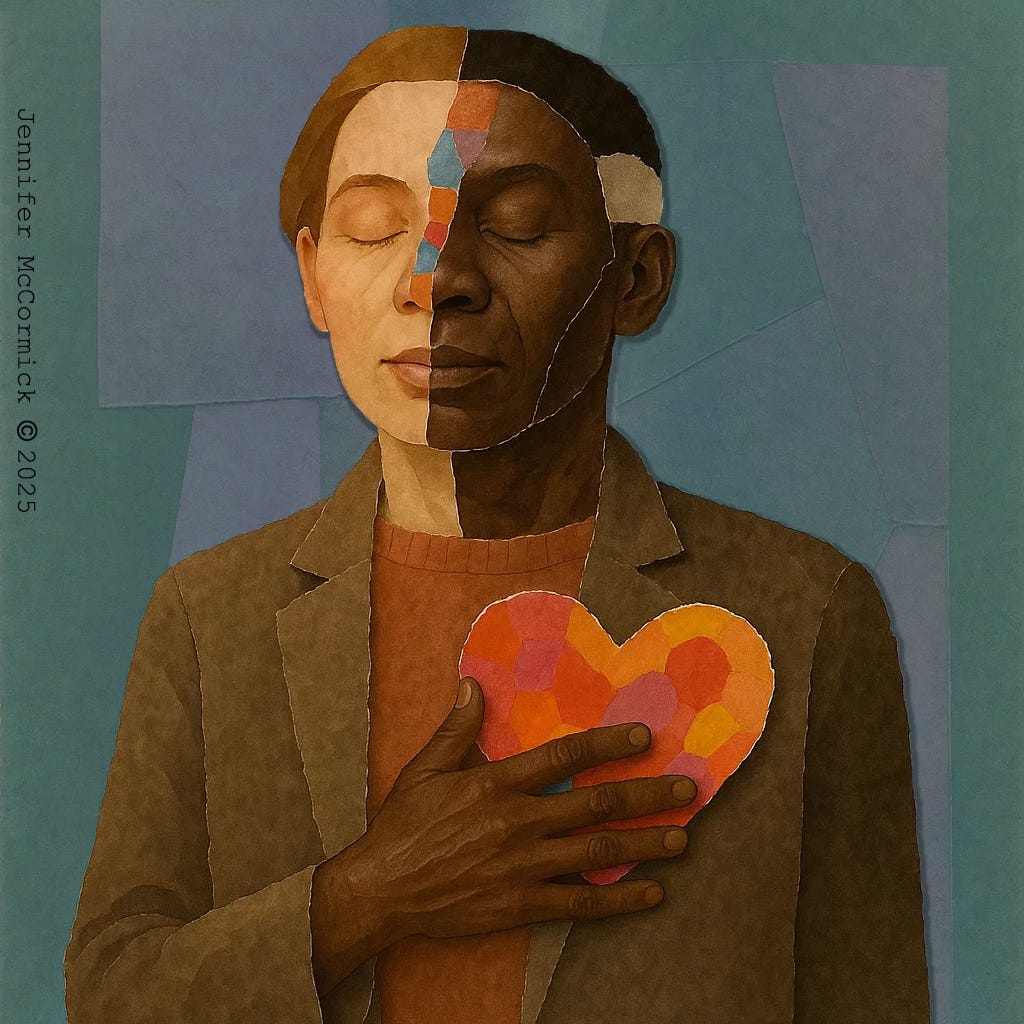
So what can we build instead? We can start by putting the phone down and letting the moment ache. We can pause long enough to feel where care actually lives in the body. We can make design choices—from apps to institutions—that ask not "What captures attention?" but "What truly eases suffering?"
Some people already are. Wadhwani AI created a system that uses smartphone cameras to detect underweight newborns when scales aren't available. Each year, 20 million babies are born underweight, and nearly half go unidentified. This isn't solving a manufactured problem or breaking your concentration to sell you something—it's meeting a profound human need.
Google's Project Relate helps people with non-standard speech communicate through real-time transcription and voice clarification. It doesn't replace human connection; it amplifies it. It gives people their voices back.
The difference isn't the company or even the sophistication of the code. It's the consciousness behind it. When we build from extraction and manipulation, driven by our own unexamined anxieties and desires, we get systems that exploit vulnerabilities. When we build from genuine care, we get tools that serve.
This is where that mind training becomes practical. As we grow more conscious of our own intentions, we're less likely to accept being exploited or to exploit others. We start asking different questions: not "How do we capture attention?" but "How do we help?"
68% of experts believe ethical principles focused on the public good won't be employed in most AI systems by 2030 (Pew Research Center, 2021). This makes our work of developing discernment even more urgent. We can't wait for ethical technology to become the norm. We need to cultivate the embodied wisdom to tell the difference between systems that genuinely serve us and those that sound caring while serving something else entirely.
I'm slowly figuring out how to do that. We're all learning about AI in real time with the other two-thirds of the world population who has an internet connection. I'll share what I learn. So far, all I have is intention:
Let's make the internet less mirror, more bridge. Let's measure success not by the minutes we keep someone scrolling, but by the moments we make them feel real.
Let's build with warmth. On purpose.
What do you think? Have you noticed your own "plastiquiet"—that brittle stillness of constant digital interruption? Have you found practices that help you distinguish authentic connection from its algorithmic simulation? I'd love to hear your thoughts and experiences in the comments below.
If this resonated with you, please share it with someone who might need to read it. These conversations matter more than ever.
References & Further Reading
For those interested in diving deeper, here are some key resources:
DAIR Institute - Timnit Gebru's independent AI research institute
Abeba Birhane's work on algorithmic bias and relational ethics
Indigenous AI Protocols - Indigenous approaches to ethical AI
"Algorithmic Injustice: A Relational Ethics" - Birhane's foundational paper
"On the Dangers of Stochastic Parrots" - Critical examination of large language models
Weizenbaum Institute - Research on the effects of digitalization on society
PS. I have received no funding or compensation from any organization mentioned in this essay. The terms "plastiquiet" and "numbra" are my original coinages describing modern forms of digital estrangement. I'd love to hear yours….
Thank you, Jen, for your beautiful and thoughtful column. As a technologist in the ninth decade of my life I have been pondering how to best use my skills and interest to help foster the care and community you are writing about. I am deeply grateful for your nurturing perspective.